Flow Through Dance Improvisation
Practice-led Research · 2025-Ongoing
Flow through Dance Improvisation is an ongoing practice-led investigation into how movement emerges through improvisational dance practice. Beginning with an investigation into flow, the research has expanded towards questions of attention, awareness and choice: How does perception become action? When is movement consciously chosen, and when does it seem to arise before conscious decision?
Through studio-based experimentation, embodied observation and engagement with different improvisational practices, the research approaches improvisation not simply as a way of generating movement, but as a process of sensing, choosing and discovering through the body.
Background
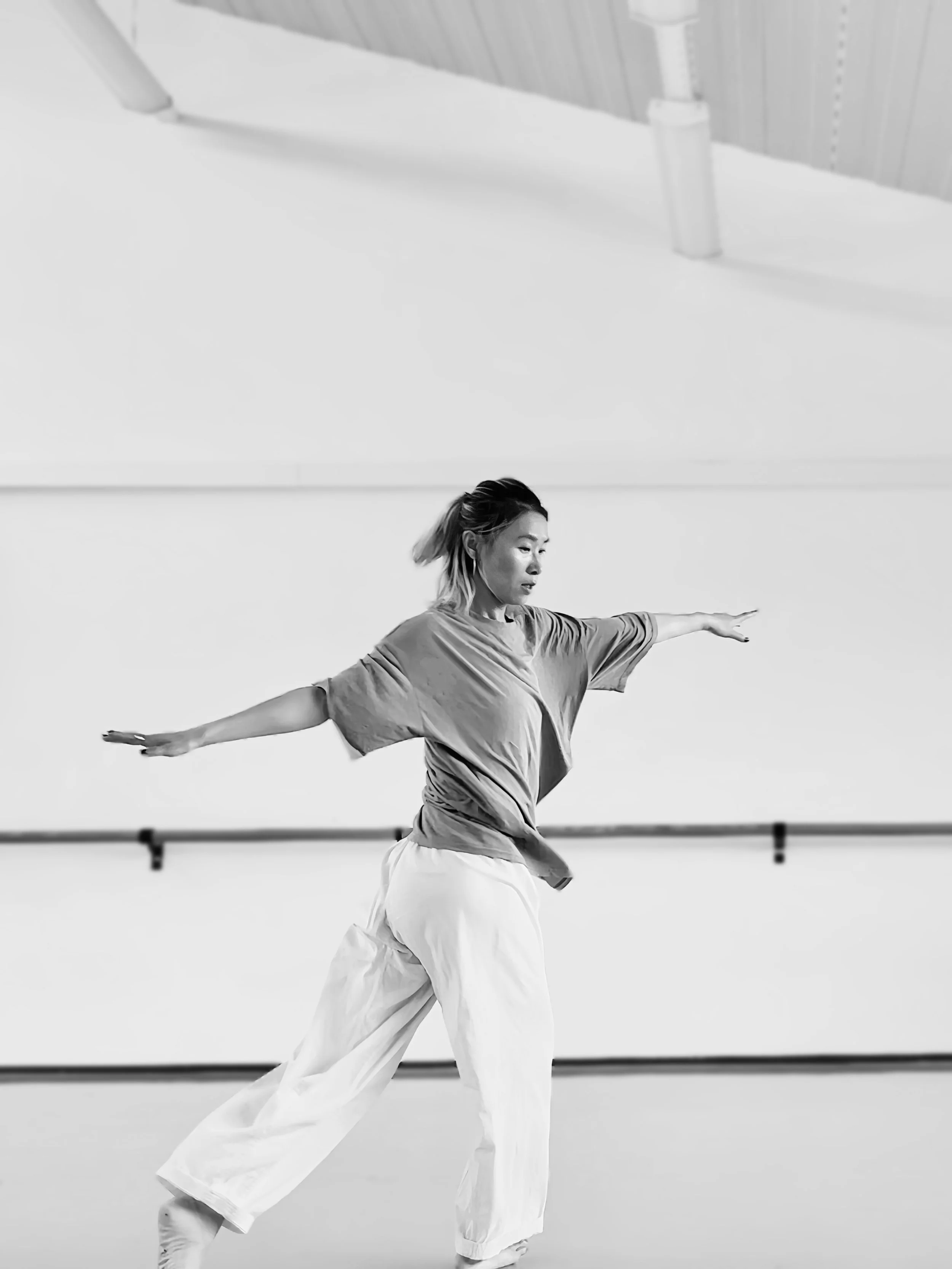
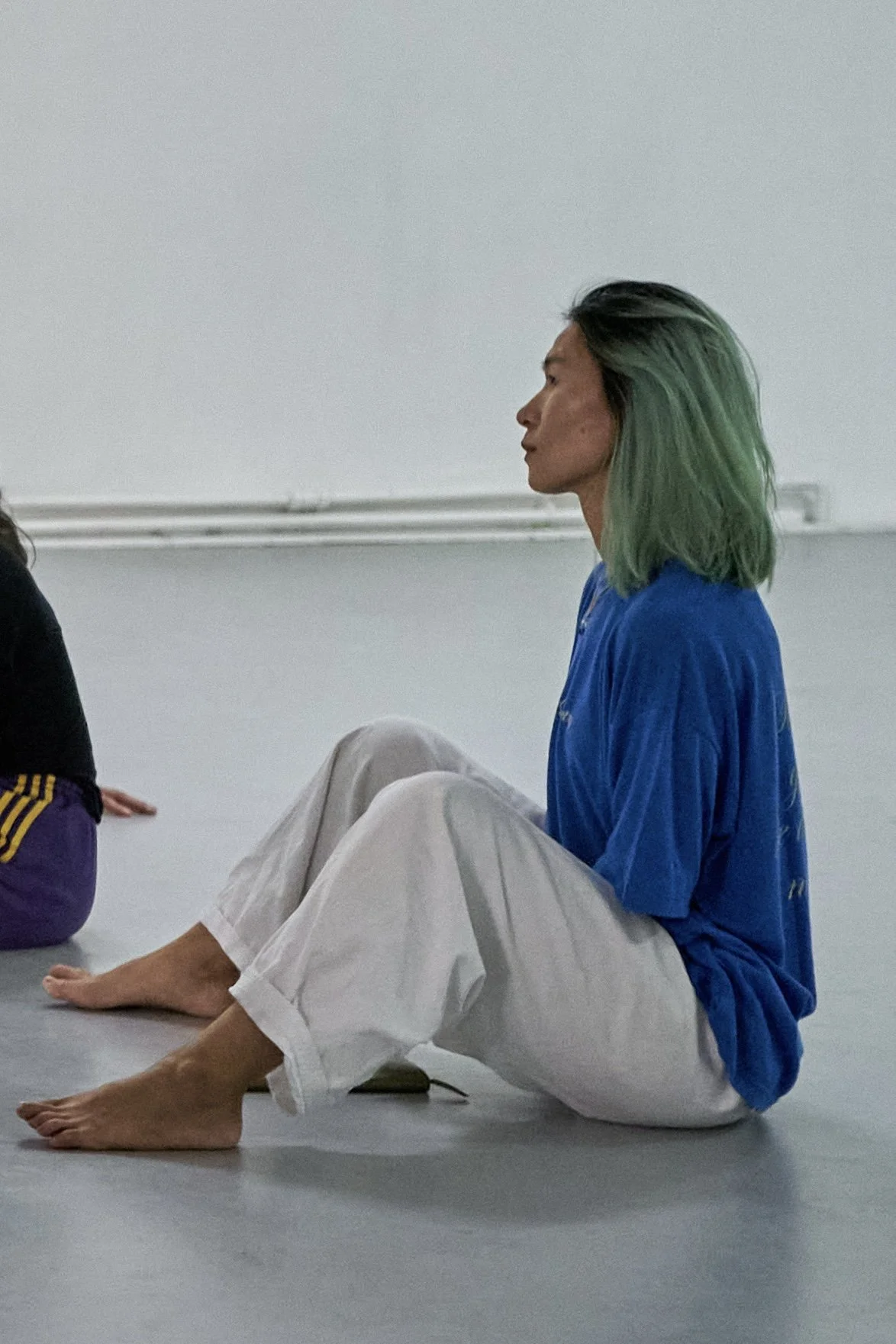
This research originated in Xiaoyu Wu’s MA in Dance Performance at the University of Chichester (2025–26), investigating how flow emerges through first-person dance improvisation.
Through repeated studio practice and reflective documentation, the research suggested that flow may be less a stable state that a dancer simply enters and more an experience that gradually emerges through awareness regulation — as attention is continually organised, negotiated and reoriented through movement, sensation, imagination, task and environment.
Bringing embodied experience into dialogue with flow theory, the study explored how practice itself can become a way of producing knowledge.
The dissertation received 85/100 (A*, Distinction), with particular recognition for its original understanding of flow, rigorous practice-led methodology and new insights into flow and dance improvisation.
Current Research
How does movement emerge in dance improvisation?
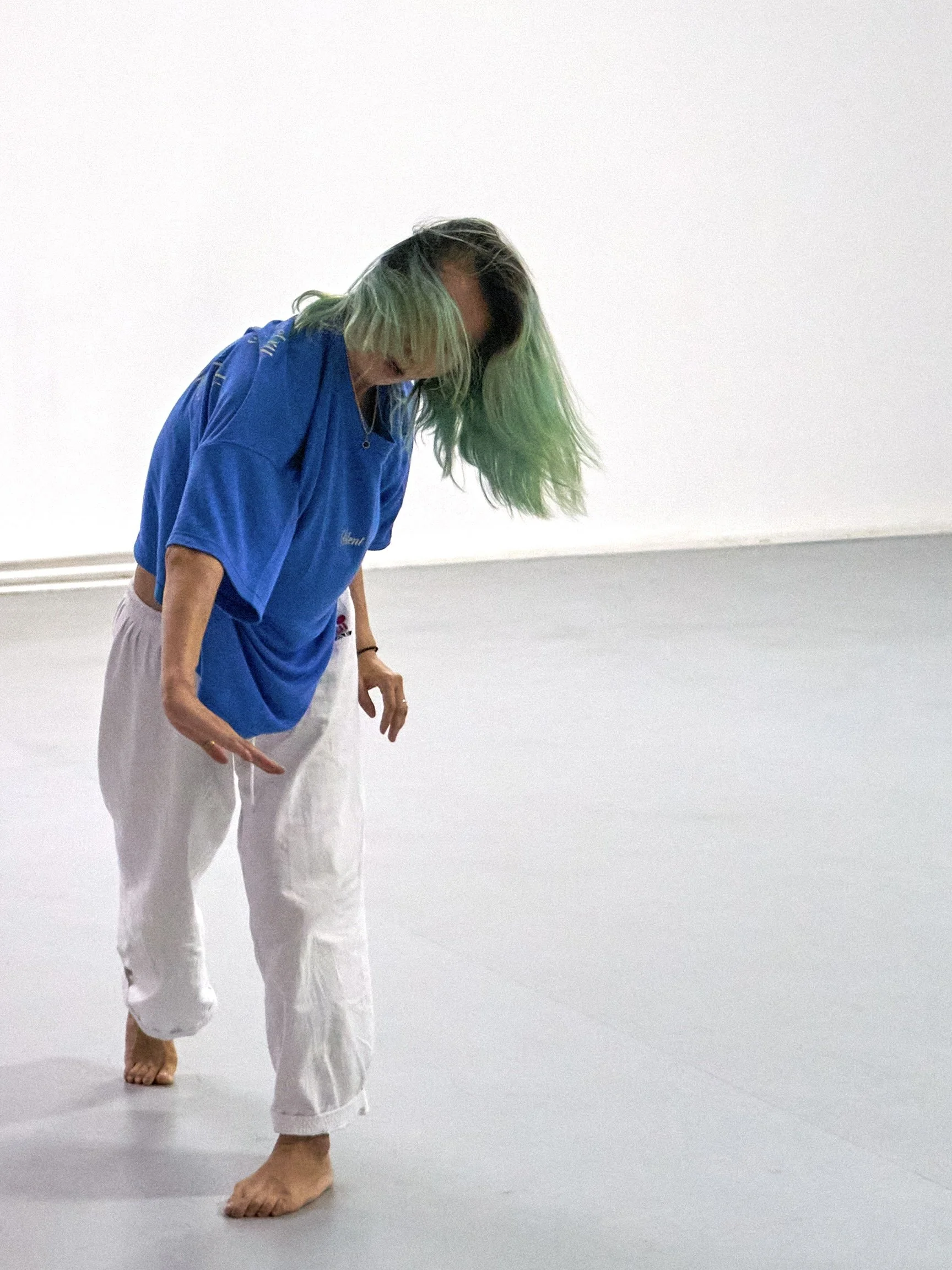
Building on my research into flow and awareness regulation, the current phase turns towards what happens before and during the emergence of movement in improvisation. I am interested in how sensation, perception, attention, impulse and choice interact as movement begins — and in the point at which movement becomes consciously known.
Rather than treating these as separate research themes, I approach them as different ways of examining the same question. Through studio experiments, improvisational scores, physical training and reflective documentation, I explore how movement arises through the changing relationship between the body, its environment, learned patterns and conscious intention — and how these processes may shape the unfolding experience of flow.